For many homeowners, the electrical works of a home can be a tricky — and intimidating — thing to navigate. However, it’s essential to be knowledgeable about your electrical system’s basic components to keep your home running and your family safe. One important component that is specifically intended to protect you from electrical dangers is your circuit breaker. In the Philippines, the Philippine Electrical Code (PEC) details its regulations for circuit breakers and other safety devices.
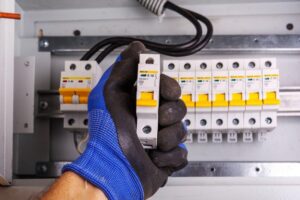
What exactly is a circuit breaker?
A circuit breaker (or simply a breaker) is a safety device that plays a crucial role in every home’s electrical system. It takes the form of an automatic electrical switch, and its job is to protect your home’s circuits and electrical appliances from overloads and short circuits. A circuit breaker employs a “tripping” mechanism, wherein if an excessive amount of electricity passes through, the breaker automatically interrupts the current’s flow to prevent overloading.
Practically, a circuit breaker has the same function as a fuse. But unlike traditional fuses, which are for one-time use only and must be replaced afterwards, circuit breakers are reusable and can be reset after they are tripped. There are different types of breakers, and each type serves specific applications and voltage levels.
The importance of your home’s circuit breaker
Your circuit breaker is a fundamental part of your home’s electrical system, responsible for reducing the risk of overloads, short circuits, and other electrical faults that could potentially lead to overheating, equipment damage, and even electrical fires. Circuit breakers provide three (3) kinds of protection, namely, overload protection, short circuit protection, and ground fault protection.
Overload Protection
Perhaps the most well-known function of a circuit breaker is to detect and intercept current flow that exceeds what the circuit can handle. A circuit breaker possesses thermal elements that heat up in the event of a prolonged excessive current flow. When this happens, the breaker is “tripped,” effectively breaking the circuit and stopping the dangerous overcurrent from causing trouble.
Short Circuit Protection
By definition, a short circuit occurs when an electric current flows through the wrong or unintended pathway in the circuit with little to no resistance. There are many possible causes for a short circuit, including water coming in contact with wiring, damaged wires, faulty insulation, loose connections, and many more. Short circuits are highly hazardous as they can cause electrical fires.
The way a circuit breaker works is that once it detects a sudden and abnormally high current, it trips and interrupts the circuit.
Ground Fault Protection
As there are many different types of circuit breakers, certain types — such as Residual Current Circuit Breakers (RCCBs) and Ground Fault Circuit Interrupters (GFCIs) — are built to protect against electric shocks caused by imbalances between the live and neutral conductors.
Conclusion
For ordinary people, it can be easy not to notice or pay any mind to the electrical workings of their home. However, to ensure that your house is adequately protected against potential electrical dangers, it is of vital importance to learn how your electrical system works and how each component plays a key role, especially safety devices like circuit breakers.
For the best electrical solutions geared for your protection, choose Phelps Dodge! As the Philippines’ leading manufacturer of quality wire and cable products, with Phelps Dodge, you can be assured of your home’s safety. Inquire today to learn more!