
Electrical cables are mostly everywhere. Chances are, the device on which you’re reading this article uses an electrical cable to power it! Cables are a constant presence in our daily lives. But what exactly are they made of?
By definition, a cable is an insulated conductor or group of conductors used to carry electric current. A cable is comprised of several components, and the types and materials of these depend on the cable and its intended applications.
Parts of an Electrical Cable
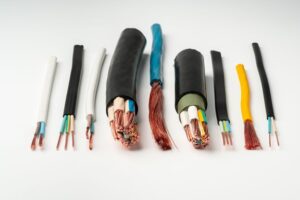
Generally, an electrical cable consists of four main parts: the conductor, the insulation, the shielding and armor, and the jacket. The variations of these parts determine the cable’s conductivity, resistivity, durability, and more. Most importantly, they indicate what applications the cable is best suited for. In the Philippines, the Philippine Electrical Code provides many regulations for cables across different applications.
The Conductor
The innermost part of a cable is its conductor — the bare wire responsible for transmitting electricity. Copper and aluminum are the most commonly used conductors.
Both copper and aluminum are favored across various applications, including but not limited to home, building, and industrial wiring. Copper wires are highly conductive and versatile, making them popular in construction and telecommunications. Aluminum wires are cheaper, lighter, and widely used in overhead power lines and more.
Conductors are either solid or stranded, with each type having its own advantages. Solid wires are more heavy-duty, whereas stranded wires are more flexible.
The Insulation
The insulation is the nonconductive shield protecting the conductor from leakages, moisture, heat, and other sources of danger and damage. Some cables are insulated, while others are not. Types of insulation commonly used in the Philippines include polyvinyl chloride (PVC), polyethylene (PE), cross-linked polyethylene (XLPE), and low-smoke, halogen-free (LSHF) variants.
As different materials bring different strengths to the table, the choice of insulation depends on the application. Indoor-use cables for buildings, for example, will preferably have flame-retardant insulation. Meanwhile, outdoor cables require weather-resistant insulation to protect them from the elements. Low-smoke and low-toxicity insulation, on the other hand, is a top choice for applications wherein public health and safety are extremely crucial, such as in hospitals.
Environment is an important factor to consider when weighing cable options, as the cable chosen must have the right insulation to endure external challenges and comply with safety codes.
The Wire Shielding and/or Cable Armor
Wire shielding and cable armor provide yet more layers of protection to a cable. Not every cable has or needs both, as this depends on its function and environment.
Essentially, wire shielding protects electrostatic interference or “noise” from other nearby cables, allowing the cable to work with uninterrupted signals. Meanwhile, the cable armor is a metallic layer that acts as the outermost shield of a cable, and it is commonly used in harsh environments such as in underground installations.
The Jacket
A cable’s jacket is what its name suggests: a protective outer layer that defends both the conductor and the insulation against physical and chemical damage. The jacket has less to do with the cable’s electrical performance and more to do with its safety and durability.
Cable jackets are commonly either thermoplastic or thermoset. When choosing between the two, it is crucial to consider the jacket material’s level of resistance to flame, water, heat, oxidation, abrasion, and the weather — and select one based on the intended application and environment.
Conclusion
While cables come in different materials, their composition remains fundamentally the same. At the core of its anatomy is its conductor or conductors, wrapped in different layers of protection, each serving its own essential purpose to ensure the cable’s excellent and reliable performance. Phelps Dodge is widely trusted for its excellent electrical solutions not only within the Philippines, but also across continents. Browse a diverse range of high-quality electrical cables on our official website, or reach us directly to inquire.