The terms “wire” and “cable” are often interchangeably used, but there’s a reason why Phelps Dodge distinguishes the two words in its product offerings. While it is a common misconception that they refer to the same thing, there is a key difference between wires and cables that everyone must know, especially when sourcing electrical components for installation in the home or for a project.
What is a wire?
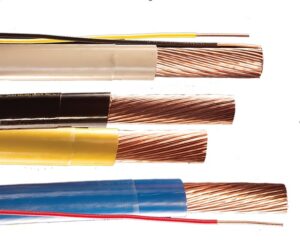
By definition, a wire is a single conductor made of a material that allows electricity to flow through it. Commonly, this material is either copper or aluminum. This conductor can be composed of either one strand or multiple strands, either left bare or protected by a sheath. This marks a fundamental difference between a wire and a cable — as a cable is never just bare wire and must be covered by some type of insulation.
Wires are generally classified as either solid or stranded. A single-strand conductor is a solid wire, while a conductor made of several strands wound together is a stranded wire.
In electricity, wires are everywhere, used in an expansive range of applications. They make up the backbone of cables and are found in everything, from the appliances in our homes to the buildings we frequently encounter, whether commercial or industrial. In the Philippines, a step outside often offers a view of unending “spaghetti wires” — the crisscrossing overhead wires that dangle from utility pole to utility pole over our roads.
What is a cable?
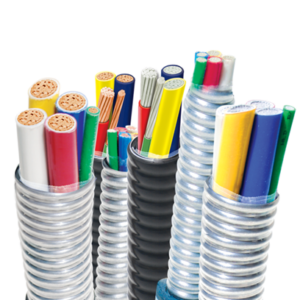
What sets a cable apart from a wire is that a cable is commonly defined as having multiple conductors as opposed to just one. Essentially, a cable is made up of multiple wires: typically, a hot wire (in charge of carrying the current); a neutral wire (responsible for completing the loop by carrying the power back to its source); and a protective grounding wire.
Insulation is a vital feature of any cable. In a cable, either all conductors inside are wrapped up in a single layer of insulation, or each conductor is individually insulated, and then all the insulated conductors are twisted together. A cable’s insulation protects each conductor from damage that can be caused by the environment. At the same time, it protects people and the environment from coming in contact with electrical currents.
There are many different types of cables, each one serving specific functions and applications. Like wires, cables are commonplace, bringing ease and convenience to our everyday lives. Some examples we usually encounter in everyday life are USB and HDMI cables. Other cables are found in more demanding applications, like electrical supply chains and telecommunication systems.
Conclusion
Though sometimes confused for being the same thing, wires and cables are distinct electrical components that play different roles. The world we know is made possible by both wires and cables, and it benefits even non-electricians to know the difference, especially as we encounter these components in our daily lives.
Phelps Dodge is a proud Philippine manufacturer of a vast range of electrical products, including high-quality wires and cables. Browse our expert-approved, long-lasting electrical solutions on our official website and find the best fit for your needs.